
They Tried to Ban These Books. Read Them Anyway.
We may earn money or products from the companies mentioned in this post.
It’s 2026, and we’re still trying to ban books.
Seriously. What are we doing?
We are in the middle of a literacy crisis. Reading scores are falling. Fewer people are reading for the pure pleasure of it all. We are constantly talking about how to get kids to read more (and be less on their phones), how to improve literacy, how to encourage people to pick up a book, and somehow (somehow), at the same damn time, we are fighting to take books off shelves.
Make that make sense.
Books are supposed to make us think. They’re supposed to introduce us to people we’ve never met, places we’ve never visited, lives we’ve never lived, and ideas we’ve never considered.
And yes, I will admit sometimes things make us uncomfortable (that’s kind of the point to challenge us). You don’t have to like every book. Hell, you don’t even have to agree with everything on page. But deciding that no one else should have access to it because you don’t like it says what exactly?
That’s where you lose me.
And the fight over who gets to decide what we read has become far too big to paint with a single picture.
Banned Books You Should Read Anyway
For this list, we are focusing on books that specifically have actually been banned or removed. Not simply challenged. Because yes, there is a difference, and we’ll get into the challenged books another day.
For now, here are 10 books someone decided readers shouldn’t have access to.
I think you should decide for yourself and read them anyway.
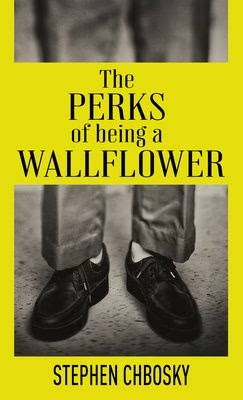
The Perks of Being a Wallflower by Stephen Chbosky
Told through letters written by Charlie, The Perks of Being a Wallflower follows the quiet, observant teenager trying to find his place in the messy world that is high school.
Between first love, friendship, family, sex, drugs, trauma, and all of the in-between fleeting moments, Charlie is learning what it means to participate in life instead of simply watching it happen around him.
Why is it banned?: For depiction of sexual abuse, LGBTQIA+ content, drug/alcohol/smoking use, profanity, and anti-family content
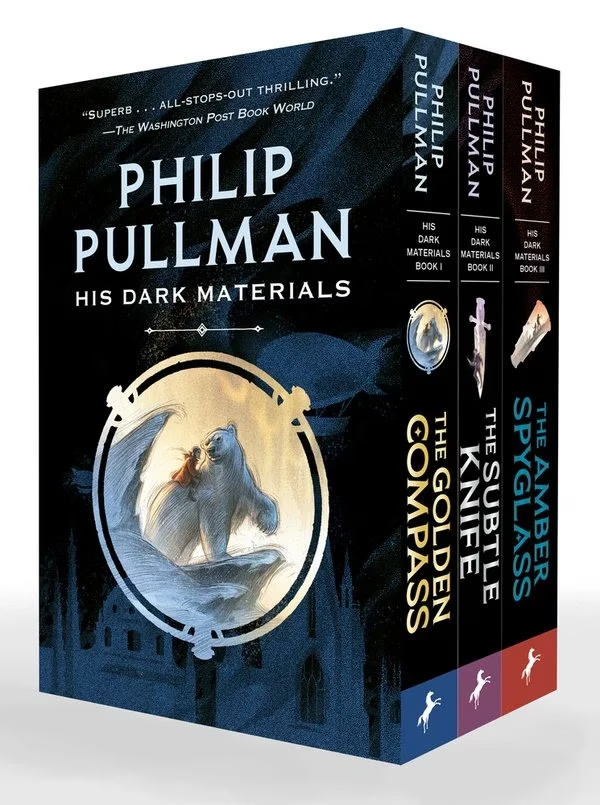
The Golden Compass by Philip Pullman
Lyra is heading north, where armored bears rule, witches roam the skies, and children are disappearing.
Including her best friend Roger.
What begins as a mission to save Roger pulls Lyra into something larger: a mysterious substance called Dust, parallel worlds, and a battle involving power, knowledge, and who gets to control both.
But Lyra isn’t completely alone. Armed with a truth-telling compass and an impressive (very impressive) talent for lying, Lyra is about to find herself at the center of a conflict that could change more than just her world. But the world around her.
Why is it banned? Because of religious viewpoints
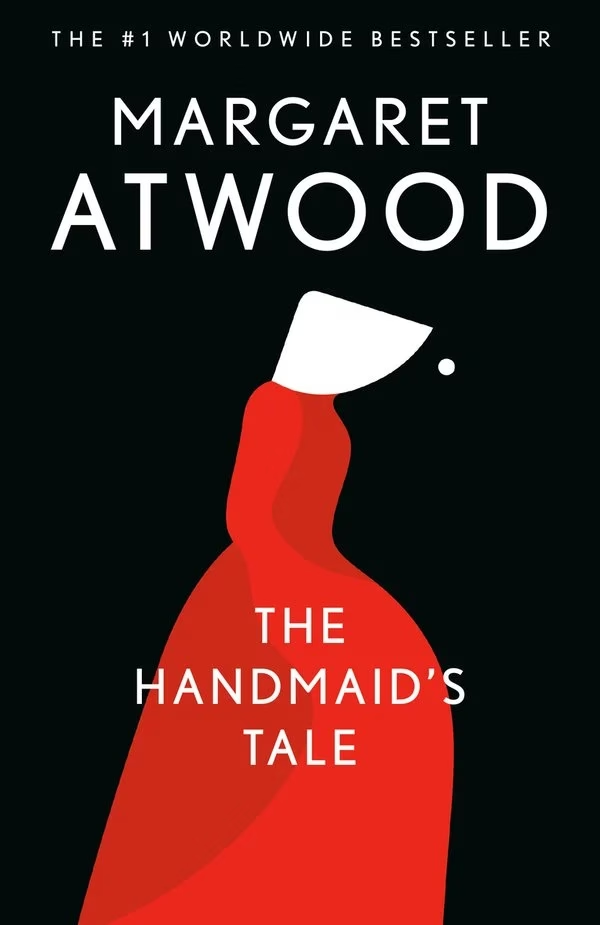
The Handmaid’s Tale by Margaret Atwood
Set in a near-future America transformed into the Republic of Gilead, complete with environmental devastation and declining birth rates.
Offred is a Handmaid, one of the few remaining fertile women, forced to bear children for Gilead’s ruling class.
Robbed of her name and separated from her husband and daughter, Offred survives by holding tightly to the memories of the life she once had…before. All while quietly resisting a society determined to reduce her to nothing more than her ability to reproduce.
Why is it banned? For profanity and for “vulgarity and sexual overtones”
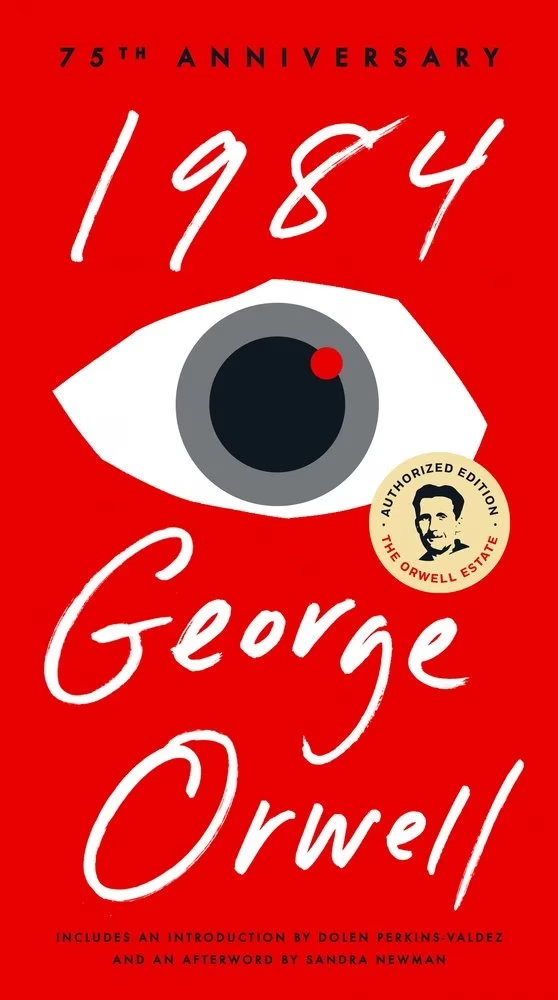
1984 by George Orwell
Winston spends his day rewriting the past to match whichever version of the truth the Party currently demands. But the more lies he creates, the more he begins to question the regime controlling his life.
Everything from the information he receives to the thoughts he’s allowed to have.
In a world where Big Brother is always watching and even having an independent thought is a crime, Winston begins quietly rebelling against the Party. But when a government controls the truth, the history, and even the language you experience, how do you resist without being discovered?
Why is it banned?: For its political themes, sexual content, and depiction of authoritarian government.
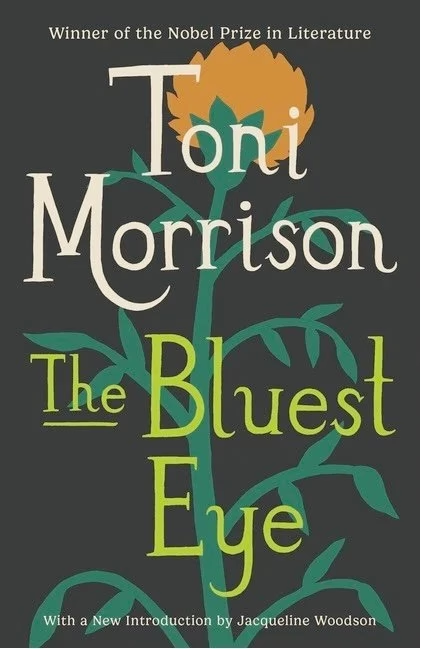
The Bluest Eye by Toni Morrison
At eleven, Pecola has learned that beauty looks nothing like her. Growing up Black in a world that celebrates white skin, blond hair, and blue eyes. Pecola begins to believe that if only her eyes could turn blue, she might finally be beautiful and worthy of being seen and loved.
But Toni Morrison’s novel follows that wish into much darker territory, exploring racism, poverty, abuse, violence, and the devastating consequences of teaching a child to hate who she is.
Why is it banned?: For depicting sexual abuse, DEI content, and because it was claimed to be sexually explicit
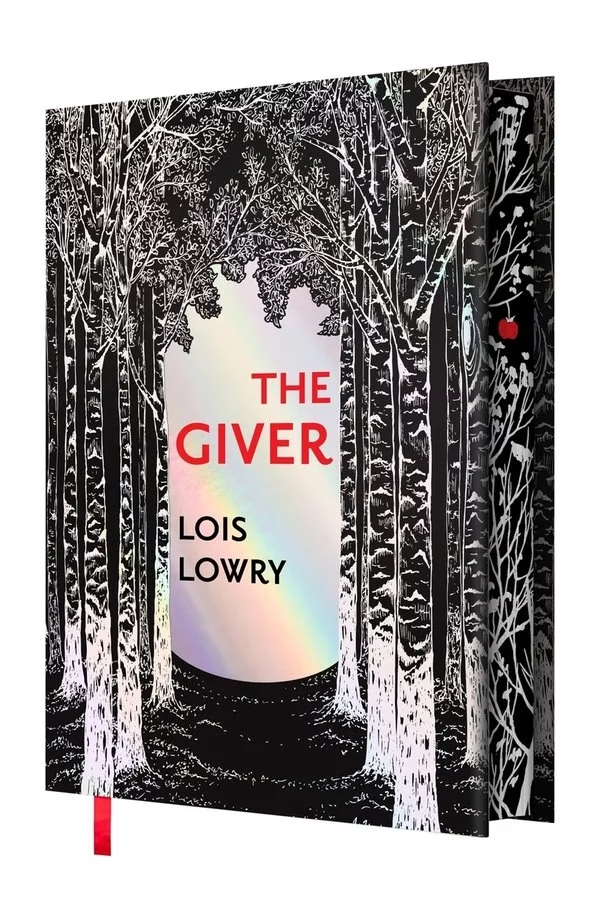
The Giver by Lois Lowry
Twelve-year-old Jonas lives in a world without war, hunger, pain, or even choice.
Everything in his community has been carefully created around Sameness, from the jobs people perform to the families they are assigned.
But when Jonas is selected to become the Receiver of Memory, he begins inheriting memories of everything his society sacrificed to create its seemingly perfect world. The color, the love, grief, joy, and even the freedom.
And the more Jonas learns, the more he begins to question whether a life without suffering is worth living if it also means giving up the freedom to truly live.
Why is it banned?: For its mature themes, including euthanasia, suicide, violence, sexuality, and the killing of infants and elderly people.
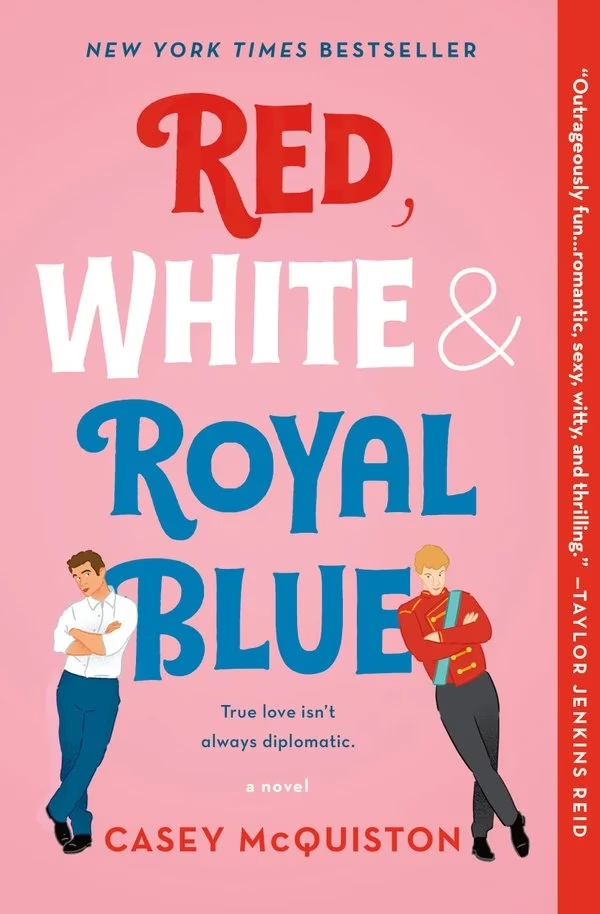
Red, White & Royal Blue by Casey McQuiston
Alex is the son of the President and has a single problem: he cannot stand Prince Henry of Wales. After their very public feud threatens to become an international embarrassment, the two are forced to pretend they’re friends for the sake of good old-fashioned diplomatic damage control.
Except the friendship stops being pretend. And somewhere between secret messages, stolen moments, and falling very inconveniently in love, Alex and Henry have to decide whether being who they really are is worth risking the carefully constructed lives the world expects them to live.
Why is it banned?: For sexually explicit content and LGBTQ+ themes.
Read Them Anyway
You don’t have to like every book on this list.
You don’t have to agree with them. Don’t have to enjoy them. You can read one, hate it, give it a single star, or write an entire review about everything you think it got wrong, then never think about that specific book again.
But you should get to make that decision for yourself. Everyone should be able to make that decision for themselves.
Books give you the opportunity to experience lives that aren’t ours, wrestle with ideas that make us uncomfortable, question things we thought we understood, and sometimes simply escape into a really good story. Of course, not every book will be for every reader. And that’s okay. It was never meant to be.
So this Banned Books Week, pick up something someone once decided shouldn’t be on a shelf for anyone to experience.
Read it.
Question it.
Love it. Hate it. Argue with it again and again.
Just make the decision yours.
More Books. Opinions. More for Your TBR.
If you’re the kind of reader who wants to decide for yourself, you’ll fit right in around The Diary.
Notes From a Reader Who Feels Everything lands in your inbox twice a month with books I’m loving, the ones I’ve been questioning, what I’m reading next, and all of the bookish chaos that doesn’t always fit on the blog.
No algorithms deciding what you get to see. Just one reader talking to another. So come read with me.
Ready for Your Next Read?
Start your Everand trial and get 2 free book credits with code DEARDIARY.
You’ve just added seven more books to your TBR. I might as well help you get started.

Read These Next:
Top 5 Best Audible Alternatives That’ll Keep Your Ears Happy!
The Drowned Queen DNF Review: Beautiful and Lost
10 New Summer Reads You Need to Add to Your TBR
Lurking Beneath: Unveiling the Secrets of ‘A Misfortune of Lake Monsters’
Love is in the Air-My February 2023 TBR
